Visiting Another Lodge: Etiquette, Dues Card, Avouchment
How to visit a Lodge you do not belong to: what to bring, how the examination works, what to wear, and the small courtesies that mark you as someone who has done it before.
Visiting is one of the genuinely great privileges of the Craft. You can walk into a room of strangers in a town you have never been to and be received as a Brother.
It is also the situation where a new Mason is most likely to be quietly embarrassed. Here is how it works.
Before you go
Call ahead. Email or phone the Secretary and say you would like to visit on a given date. This is not required in most places but it is universally appreciated, and it heads off the two things that ruin a visit: turning up on a night the Lodge is dark, or turning up on a night they are conferring a degree you have not yet received.
That second one matters. You may only sit in a Lodge opened on a degree you hold. If you are a Fellowcraft and they are working the third degree, you will be asked to withdraw. No offense meant and none should be taken, but the drive is wasted. Ask what they are working.
Check the dress code while you have them. See what to wear to Lodge.
What to bring
Your current dues card. This is the one non-negotiable item. It proves you are a member in good standing of a recognized Lodge, and no dues card means, at best, a long conversation.
Keep it in your wallet permanently. A photo on your phone is better than nothing and is accepted in some places, but plenty of Tylers will want the physical card, and a dead phone battery is a bad way to find out which kind you are dealing with.
Photo ID. The dues card says a Brother of that name is in good standing. The ID says you are him.
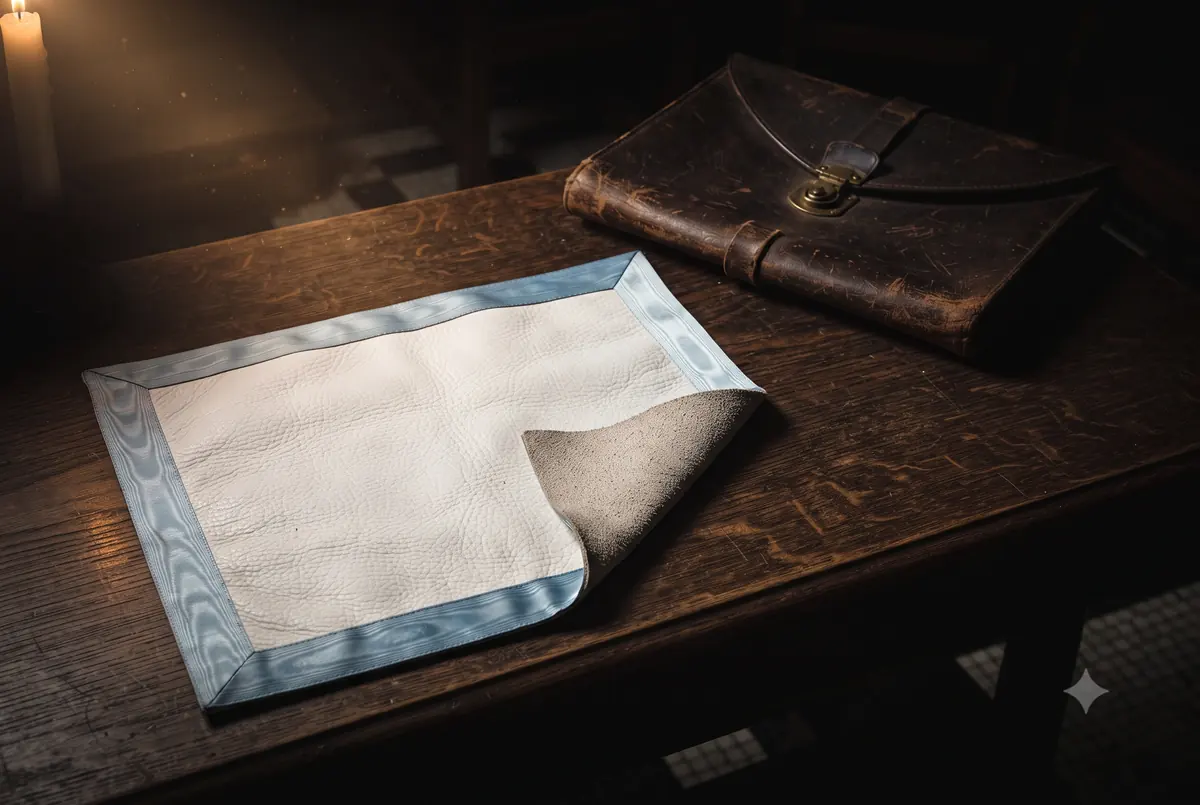
Your own apron and white gloves, if you have them. The Lodge will have both, but arriving with your own is the mark of a regular visitor.
Getting in: avouchment and examination
There are two ways to be admitted to a Lodge where nobody knows you.
Avouchment is the easy one. A member of that Lodge who has sat in Lodge with you before vouches for you. Done. If you know somebody in the Lodge, tell them you are coming; it saves everyone twenty minutes.
Examination is the other. A committee takes you into a side room and satisfies itself that you are what you claim. It is not hostile and it is not a memory test designed to catch you out; they are establishing that you have actually received the degrees. You will be asked to prove yourself in the manner of your jurisdiction, and you may be asked to take a test oath.
Be honest about what you know. If your Grand Lodge’s work differs from theirs, and between jurisdictions it very often does, say so. Examiners deal with this constantly and know their own ritual is not universal. A visitor who says “we don’t do it that way in Pennsylvania, ours goes like this” is doing exactly the right thing. A visitor who bluffs is the problem.
If you cannot satisfy the committee, you will not be admitted. That is not an accusation of fraud; it usually means the ritual differences were too large. Most Lodges will still feed you.
Recognition: the thing to check first
A Lodge can only receive visitors from Grand Lodges it recognizes. Recognition is a formal, mutual relationship between Grand Lodges, and it is not universal.
Inside the mainstream US system this is rarely an issue between states. It becomes a live question with Prince Hall Masonry (recognition varies state by state and has changed a great deal over recent decades), with any body calling itself Masonic that holds no Grand Lodge charter, and with a great many foreign jurisdictions: see visiting a Lodge abroad.
If in doubt, your own Grand Secretary’s office will tell you who your Grand Lodge recognizes. Ask them, not the internet.
Inside the Lodge
The courtesies are small and they are noticed.
- Arrive early. Fifteen minutes at minimum. Examination takes time and it is rude to make a Lodge wait.
- Introduce yourself to the Tyler. He is the one at the door and he will route you correctly.
- Salute on entering, in your own jurisdiction’s manner. Nobody expects you to know theirs.
- Sit where you are put. If you are shown to a seat of honor, take it graciously.
- Stand when addressed. You will almost certainly be introduced by name and Lodge, and asked to say a few words. Have something ready: your name, your Lodge, its number and town, thanks for the welcome, a compliment on the work you have just seen. Thirty seconds. Not a speech.
- Do not correct their ritual. Ever. Their work is right in their room. Discuss the differences afterward over coffee, where it is one of the most interesting conversations in Masonry.
- Phone off. Not silent, off.
Afterwards
Go to the meal. The meal is where the visiting actually happens: the Lodge room is the formal part and the table is the fraternity.
Sign the visitors’ book. Take a card from the Secretary. If the Lodge has a coin, a pin, or a token, ask about it; many Masons collect them and Lodges are proud to hand them over.
And send a note the next day. A three-line email to the Secretary thanking the Lodge is remembered far longer than it takes to write, and it is how you get invited back.
The one rule under all of this
You are a guest, and for one evening you are your own Lodge’s entire reputation in that room. That is the whole of the etiquette; everything above is just the detail.