Masonic Lapel Pins: Emblems, Fastenings and Gifts
Choose a Masonic lapel pin by the wearer's emblem, its size and fastening. A guide to Craft pins, degree and body designs, and what to check on a retailer listing.
A Masonic lapel pin is easy to buy only after you know what its emblem says about the wearer. A square and compasses pin, a Past Master jewel, and a Scottish Rite eagle are different choices even when they are the same size. This guide helps you choose the emblem, then check the fastening, dimensions and current retailer details. Browse the pin category when you are ready to compare designs.
Start with the wearer, then the emblem
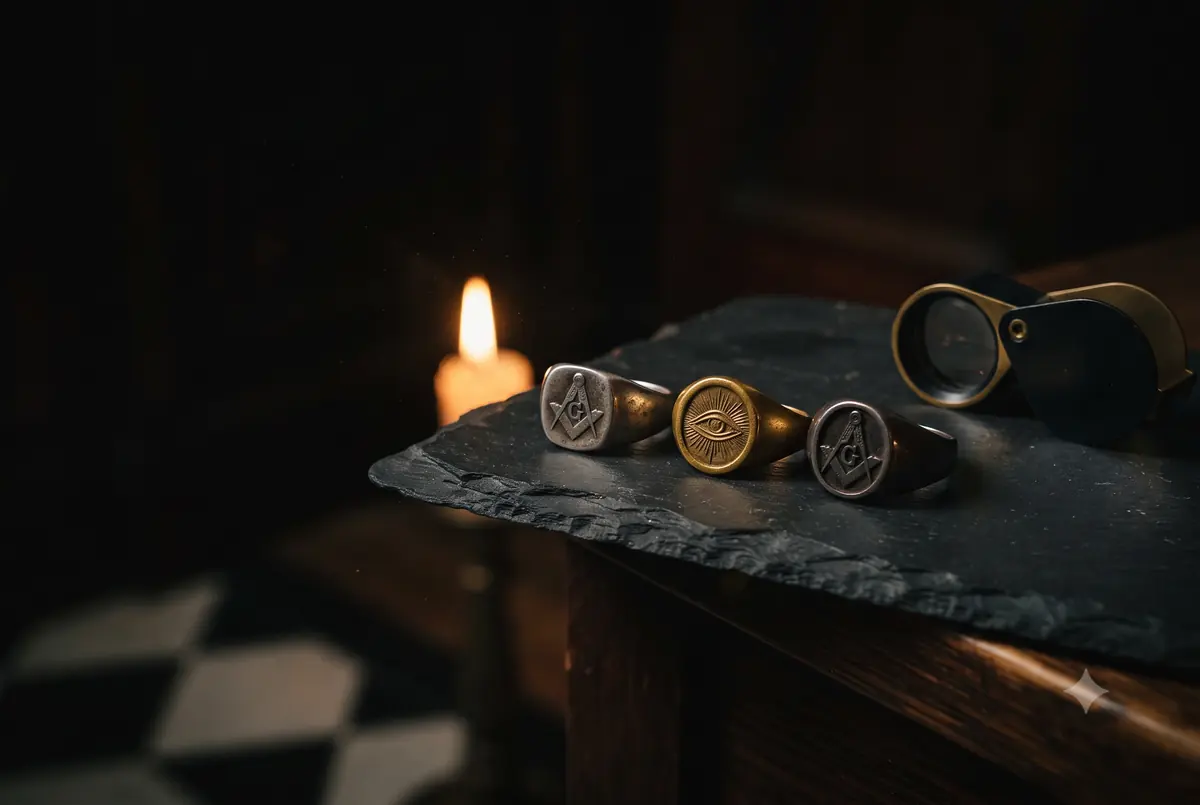
The square and compasses is the familiar Craft emblem. For a Master Mason, it is usually the simplest choice. A candidate should wait until he has been raised before wearing it; ask his Lodge Secretary about local practice. If you are buying for a Brother whose other memberships you do not know, start with the Craft emblem or a gift without an earned emblem.
Other pins can name an office, degree or separate body. A Past Master jewel marks service as Worshipful Master. A double-headed eagle or numbered Scottish Rite design identifies the Rite and may name a degree received there. A cross and crown is associated with Knights Templar. The scimitar and crescent identifies the Shrine, and the five-pointed star identifies the Order of the Eastern Star. Confirm the recipient holds the office, degree or membership before choosing one of these. The Master Mason degree remains the highest degree in Freemasonry; 32° is not a rank above it.
An Apprentice or Fellowcraft design may name a degree, even if the title does not say “Entered Apprentice” in full. Do not treat it as a generic square and compasses pin without checking the design. If a title combines several bodies or degree numbers, read the full design before assuming the plain Craft emblem is the only thing on it. The symbol directory is a useful check for an unfamiliar mark. For Scottish Rite and Shrine designs specifically, see the Scottish Rite and Shrine pin guide.
Choose a size that suits the use
Check the pin’s stated height and width in the current listing. A close-up photo can make a small pin look large. Compare those dimensions with a pin the wearer already uses, especially if it must fit on a narrow lapel. A hat pin, tie tack and lapel pin may share a design but have different posts or backs; use the fitting shown in the listing, not just its title, to decide where it can go.
Think about when it will be worn. A small, simple pin may suit daily clothing; a larger or more detailed design may be easier to see at an event. Meeting dress differs by Lodge, so check with the Lodge Secretary if the pin is meant for Lodge wear. The dress guide covers the broader question.
Check the fastening and finish
A standard clutch back grips the post by friction. A locking back uses a mechanism to resist coming loose. Neither label tells you the quality of the specific item, so inspect the listing’s photos and description for the fastening supplied. If the pin will be worn often, consider whether a replacement back is available. A two-post design may help a broad pin sit level, but confirm how many posts the current item actually has.
Read material words literally. “Gold tone” describes a color; it does not mean solid gold. “Gold plated” and “solid gold” are different constructions, and a photo cannot verify either. Check the current listing for its stated metal, enamel or other finish, dimensions, included backing, and return terms. Our catalog stores product names and some editorial notes, not live specifications or availability.
Buying pins as gifts or for a Lodge
For a Brother you know is a Master Mason, a plain Craft pin avoids ring sizing and an uncertain appendant-body emblem. If he is a Past Master or belongs to another body, confirm the exact design he uses before buying a pin that names it. A service-year pin may be presented by his Lodge or Grand Lodge; ask before ordering one separately. For a candidate, choose a book or another gift without a membership emblem instead.
For a Lodge order, check the quantity, whether each pin has its own back, and whether the emblem and any printed text match the Lodge’s request. Retailer pack titles can be ambiguous. Ask the Lodge Secretary about local regalia and presentation customs before ordering degree or officer designs in quantity.
Before you follow a catalog link
- Confirm the intended wearer is entitled to the emblem, including any degree or body named in the design.
- Compare the listed size with a pin the wearer already likes, or measure the lapel or hat it is meant for.
- Check the post, backing, stated material and included pieces on the current retailer page.
- For a gift or Lodge order, confirm the design and read the retailer’s current return terms.
The square and compasses pin shelf is a starting point for Craft designs. The pin directory also has separate, labeled shelves for Past Master, York Rite, Scottish Rite, Shrine and Eastern Star designs.
Frequently asked questions
Can I give a square and compasses pin to someone joining a Lodge?
Wait until the recipient has been raised as a Master Mason. For a candidate, a book or another gift without a membership emblem is a safer choice. Ask the Lodge Secretary about local custom.
Does a Masonic pin have to go on the left lapel?
There is no single rule for every Lodge. The left lapel is common, but the wearer's Lodge or Grand Lodge may have its own expectations for meetings and formal events.
What is the difference between a clutch back and a locking back?
A clutch grips the post by friction. A locking back has a mechanism intended to hold it in place. Check the current listing for the actual fastening, and consider a spare back for a pin worn often.
Is a Shriners or 32° pin a general Masonic gift?
No. Those designs identify membership in the Shrine or a degree in the Scottish Rite. Confirm the recipient belongs to the body and has received the degree shown before choosing one.